Friday, November 09, 2007

Legacy Of The Force: "Inferno" by Troy Denning & "Fury" by Aaron Alston (Arrow Books)

The galactic civil war continues, as Jacen Solo continues to strengthen his grip on power and increasingly emulates of his grandfather.

The latest two instalments of the Legacy Of The Force series bring us yet more of the story of Jacen Solo’s fall further and further towards the dark side, cementing him very firmly in the enemy’s camp, pitted against everyone who at one time loved him: Luke, Leia, Han, his sister Jaina and also his lover and fellow Jedi, Tenel Ka.

Troy Denning’s “Inferno” is not the best volume in this series. That’s not to say it’s badly written or fails to provide sufficient Star Wars-universe action, but it left me with an unsatisfied feeling after I finally finished the last page. The start of the novel is very slow – from the funeral at the beginning (when Luke, to me, just comes across as gullible beyond belief), until the big set-piece battles at the planets Kuat and Balmorra, when the pace is picked up and the story becomes considerably more attention-grabbing.

The novel is very fast-paced, which perhaps gives it a little bit of a rushed feeling, as it clearly has the feel of a stop-gap before bigger events further down the line blow things wide open (what these events are, though, I have no idea yet).

This is the first novel with Jacen’s inner-monologue being taken over by his Sith personality, Darth Caedus. Oddly, and slightly annoyingly, given the “evil” reputation of the Sith, Caedus comes across like Jacen’s mischievous twin. He’s certainly no Vader at this point. With luck this was just him getting comfortable with his new identity. I do find it strange that he bothered to come up with a new name for himself now – no one knows who Darth Caedus is! Absolutely no one, so it seemed a little pointless.

The ending of the novel, again, felt a little rushed, which disappointed given the massive destruction caused by Jacen (read the book, not going to spoil it for you). The conflict between Ben, Luke and Jacen was pretty satisfying, but at the same time irritating in the lack of consistency. At one point in the novel, Luke pins and effectively paralyses Jacen, completely dominating his movements. Then in the final battle, Luke seems to be nowhere near powerful enough to do such a thing. Slight problem with continuity. That, actually, is something that’s been bugging me about the novels for some time – Luke Skywalker is meant to be the most powerful Jedi in the galaxy, but at times it seems like he’s less powerful than others; perhaps through his Buddhist-like abhorrence of violence, perhaps because the authors don’t want to make him God-like but go a little too far bringing him back to earth. This series better end with the mother of all displays of Jedi power-displays.

Despite these minor shortcomings, I powered my way through it, and couldn’t wait for the next instalment, “Fury”.

Fury” (by Aaron Alston - released December 6th) starts off strongly, with Caedus’s character developing more into a deranged, twisted and paranoid schizophrenic. This works wonderfully with Alston’s sense of humour, which we are treated to early on in the book, as well as throughout, deftly handled to avoid farce. Alston’s writing style is more fluid and readable than Dennings (so, it’s insanely readable).

The novel begins with clean-up following Jacen/Caedus’s brutal attack from the end of “Inferno”, and then moves to Jacen’s desperate attempts to hold on to the one thing that tethers him back to his life before, when he had love in his life: his Daughter, Alanna. By kidnapping her, though, he creates for himself a barrier to doing his job properly – she becomes a distraction, making him second-guess himself and make selfish decisions that often leave him in rather precarious positions.

Luke starts to come out of the depressive fug he’s been in for the past two novels since his wife, Mara, died at Jacen’s hands. Ben, Luke’s son, continues to believe Jacen’s to blame, but everyone else (rather densely) can’t bring themselves to believe that.

In all, this is a faster-paced and more fulfilling novel than “Inferno”, but still has a filler-feeling to it. It’s in no way a bad novel, but it feels very much like a chapter in the middle of a very long book, a small lull in the action before the last third of the story takes us on a wilder ride. This is not surprising given the fact that there are only two more volumes left in the series. Now that the stage has been set for whatever the series climax will be, things are starting to feel like they’re being spun out, rather than any more character development or plot thickening. This is because, since the fifth volume in the series (“Sacrifice”), it’s been pretty clear what’s going to happen from now.

We’ll have to see how things change with “Revelation” and “Invincible”, the last two volumes in the Legacy Of The Force series. With any luck, things will be amped up to the max, and we’ll start to get some proper Star Wars action to get our pulses racing once again.

Both novels are still worth reading, but you will be left wanting the next two novels right now, just so we can know what's going to become of the main protagonists. Personally, I think someone's either going to come to a very sticky end, or we're going to have a Return Of The Jedi moment, with someone being redeemed...

Wednesday, June 20, 2007

Andrew Gross - "The Blue Zone" (Harper/HarperCollins)

A disappointing, but still enjoyable thriller from former James Patterson collaborator.

There was something a little disappointing about Mr Gross’s The Blue Zone. Although it sped along at a fair clip (nearly rivalling James Patterson for sheer number of chapters), I found very little of it surprising. This was especially disappointing as I think this is the only book that covers this subject – namely, what happens when someone goes AWOL from the Witness Protection Program (or WITSEC for short). The two main characters – Benjamin Raab/Geller and his daughter Kate – are likeable enough, though Kate does fall into the category of “damp, female thriller character”. Perhaps I’m being harsh, but I have yet to come across any female characters in mainstream thrillers that are not overly-emotional and say the cheesiest of things. Apart from these occasional trips, Mr Gross writes tightly, fluidly and never makes the reading feel like a chore or suffocating.

Not to worry, Ben makes up for it. In fact, the best parts of the book are those where we follow Ben alone, and at the beginning, before he and his family (minus Kate, who stays behind to continue her PhD and get married) are shipped off into WITSEC.

The other main problem with this novel is that I found none of it surprising. Almost every set-up was a little obvious, which has left me feeling a little unfulfilled by the novel. It’s a pity as his previous work has been very good – perhaps he needs the restraining hand of James Patterson to keep him from pouring in the schmaltz too heavily…?

Needless to say, the book is enjoyable, and you will find yourself drawn along by the perfect pacing of the story. While you won’t necessarily be riveted or unable to put it down (which I was unable to do with his previous novels, such as “The Jester”, “Life Guard” and especially “Judge & Jury”).

A perfect summer thriller? I’d say so, yes.

Sunday, May 20, 2007

Legacy Of The Force: "Bloodlines", "Tempest", "Exile" (Arrow Books)

Following on from the explosive opening chapter “Betrayal”, the Legacy Of The Force series manages to keep up the pace through these next three superb instalments.

"Bloodlines" (Karen Traviss) sees the return of everyone’s favourite bounty hunter, Boba Fett, who’s personal quest to halt the aging process caused by his being a clone and his desire to find his former wife and daughter brings him into contact with Han Solo and Princess Leia – though this time it is under better circumstances than the events that led to his notoriety in the first place. While it’s clear that Han hasn’t forgotten about being frozen in carbonite, he has a bigger fish to fry in the form of his cousin, Thrackan Sal-Solo who has been fomenting the civil war between Corellia (Han’s home-world) and the Galactic Alliance. His family continues to be torn between duty and morals, and the Solo-Skywalker clan begins to blur the lines between the two sides. Han has perhaps his most violent turn during this book, which while completely out of character to anyone who is only familiar with the movies, for those who have read the New Jedi Order series, it does not seem so excessive.

Jacen continues down his path towards the Dark Side, surreptitiously influencing Ben Skywalker as he goes, delving further into the workings of his own Defence League (which aren’t too dissimilar to the Brown Shirts, if you think about it). Equally noticeable is his (topical) use of torture at one point, which sets in motion his ultimate fall as well as dangerous potential dealings with Fett.

"Tempest" (Troy Denning) follows immediately after Bloodlines, with a little more focus on Jacen and Tenel Ka’s relationship and their still-secret daughter. It is unfortunate that author Troy Denning thought it would be a good idea to give the girl a “cute” lisp, as there is absolutely no excuse for this. Ever. Otherwise, the book sees the increased influence of Lumiya, Dark Lady of the Sith on Jacen. Luke Skywalker and his wife continue to be irritatingly ignorant about what’s going on – there are a couple of instances when they really should have been able to guess what was actually going on, but were blinded by previous feelings for Jacen – even though said feelings have been continually strained throughout this series. A good deal of space battle refreshes this series, which the political intrigue and conspiracy surrounding the rebellious Correllians and their allies adds more depth and breadth to how far this series could go.

Finally (for the moment), "Exile" (Aaron Alston) finishes of the first half of the series with pretty much more of the same fast-paced space opera-style adventure. Ben Skywalker is sent on his first solo mission, to the Sith homeworld (where he acquires an evil amulet, a cool sentient ship and a young female companion, who will likely prove pivotal in some moral dilemma in a future instalment of the series). It's interesting to see his growth as a character as he must weigh in his mind what he believes he should do and what he believes Jacen wants him to do. It is becoming apparent that Ben is not as completely devoted to his teacher as in the previous instalments. Han and Leia’s relationship with their son worsens as he pushes not only them, but also his twin sister further away from him. His fall into the Dark Side is very almost complete. They also find themselves in an increasingly precarious position straddling both sides of the imminent galactic civil war.

Overall, the novels continue to draw the reader along, answering some questions at the same time as posing more, leaving hints and suggestions for possible future developments, but never revealing too much – as it should be in a serialised story arc. There is a greater synergy between the authors, too, as the books blend together seamlessly, not noticeably written by different authors. It has become the case that the best way to identify which author is by the secondary characters that play parts in the novels. The pace never wanes, and I found that I burned my way through these books much faster than almost any other book I've read (except, perhaps, Terry Pratchett's work).

A healthy sprinkling of humour throughout, more real characters than before, with genuine faults and no excessive hero-devices means the characters are all easier to relate to, making the reader more invested in their future. This bodes well for the second half of the series.The only annoying thing is the wait before the rest of the series comes out…

Saturday, April 21, 2007

"Betrayal" - Aaron Alston (Arrow Books)

Betrayal is the beginning of the latest Star Wars series, which ushers in (yet another) dark time for Luke Skywalker and his expanding clan of family and friends. This time, the darkness doesn't come from beyond the galactic rim. This time, its source is far closer to home.

Mr Alston - already well known and loved for his previous excellent contributions to the Star Wars universe - starts this nine-part series off with a real bang, throwing the reader straight into the action with Jacen Solo (Han Solo and Princess Leia's son) and Ben Skywalker (Luke's son) discovering a weapons trafficking operation on Adumar - one of the many planets that have pledged allegiance to the fledgling Galactic Alliance. From death-defying free-falls and displays of lightsaber mastery to speeder chases and unreal acrobatic feats, the first chapter alone is enough to grip readers (new and old) with heightened excitement for this most promising series.

While this is obviously part one of a longer series, the novel contains enough to keep the casual reader interested and entertained throughout - be it the thought of now elderly Han Solo galavanting about the universe in an attempt to prevent a looming civil war, or the equally elderly General Wedge Antilles (which people will know from the original movies, but perhaps have missed - he was a member of Rogue Squadron, who rose to general rank) getting the better of some GA operatives tasked with keeping him in check - it's a devious, yet elegantly simple plan, that should raise a smile on even the most cynical reader's face. The dialogue between Antilles and another general, Tycho Celchu is equally entertaining, and shows that while the ideas and events of the story might be serious, this is still meant as entertainment and Mr Alston has a deft wit which he uses very well - never devolving into farce, and never overwhelming us with puns or jokes. A healthy balance.

Over-shadowing everything is the steadily darker path that the aforementioned Jacen Solo is taking. To be honest, his new character is a welcome change from the New Jedi Order series, which portrayed Jacen as whining, prissy and just simply annoying as a philosophically-wracked teenager. While there was some development towards the end of the series (Traitor saw him subjected to horrific amounts of torture), his new coldness and more detached attitude towards human (or, as it's Star Wars, alien) life makes him a much more interesting potential-bad guy. As mentor for Luke's son, though, there is greater possibility for future tragedy - what will become of the son of everyone's favourite Jedi if his teacher falls to darkness? Will he be sacrificed for the greater good, will he be drawn into darkness with his master? Only time will tell.

Expertly written by Aaron Alston, with a perfect mix of humour, plenty of action (on the ground, with lightsabers drawn, and in space) and political intrigue, Betrayal is an excellent start, never letting up the pace and always dragging the reader on. I couldn't put it down, and often found myself reading well into the dawn hours, unable to tear my eyes off the pages. A very encouraging sign of what is to come.
Alston also writes the fourth book in the series, Exile (paperback out now, and review pending) and the penultimate volume, Fury (released later this year). If anyone wanted to dive back into the Star Wars universe, although earlier novels would perhaps be recommended, in Alston's Betrayal they would receive a literary, space opera treat. With enough explaining of backstory, it wouldn't require previous knowledge of the New Jedi Order series, and would no doubt be just as enjoyable (if not more so, as the NJO series did start to get a little too long in the tooth...).
Nothing is set in stone during this first novel, except that the remaining eight volumes will be full of new twists in the Star Wars tale, as the Solos and Skywalkers find themselves split on either side of the escalating galactic conflict.

Watch this space. (A review of the next 3 books - Bloodlines, Tempest and Exile - will be posted early next week.)

Sunday, April 15, 2007

Brad Meltzer - "The Book Of Fate"

The Book Of Fate was the second book by Mr Meltzer that I read (first being The Millionnaires) and - as an indication of just how good a writer he is - I have since read the rest of his novels in very quick succession.

The novel focusses on the trials and tribulations of Wes, personal aide to former president Manning. Horribly scarred by a supposedly-failed assassination attempt, Wes has spent the past eight years working for the former president and his family, almost religiously devoting himself to his work and the president's legacy. Then, as indicated in the blurb on the back of the book, close friend Ron Boyle who was thought to have died during the attempt on Manning's life is spotted by, alive and well (with minor plastic surgery), breaking into Manning's dressing room in Malaysia.

What follows is Wes's attempts to discover the truth about what happened on that fateful day, when his life was altered so painfully - he lost all nerve and muscle control down one side of his face. What makes this different from standard thrillers is both the outcome, the reason behind the mystery and the clues available to Wes and his helpers - a gossip columnist from a Florida newpaper, and the aspiring Congressman who got Wes his job with Manning.

After finding a bizarre code scribbled by the side of a crossword filled in by the president, Wes delves deeper into the loyalties of his co-workers and also the impetus of the man who wounded him - who is still alive, languishing at a mental hospital, until someone from his past pays him a visit.

Don't be fooled by the title - this is not really a thriller in the same vein as Dan Brown's Da Vinci Code, or any other of the multitudes of founding-father conspiracy novels that have been pushed on the public in recent years. While there is some reference to Freemasons and so forth, The Book Of Fate follows a more conventional thriller style.

The pace is quick throughout, without lacking detail or cutting corners. Meltzer's ability to spin a tale has certainly improved since his first novel, The Tenth Justice (which was also a very enjoyable, cleverly-plotted political thriller). The book fulfils all the hopes anyone might have for a thriller in this day and age - great characterisation, a pace that never lets up, a convincing storyline, a healthy amount of wit, and a great finale.
If there was one fault with Mr Meltzer's writing style, it would be that occassionally he used certain phrases that sound cheesy or out of place but these are usually short and not integral to the story. Thankfully, he only partially succumbs to my biggest bug-bear with thrillers, and that's the emotional aspect of many characters - they seem to only experience the extremes of emotion. With Meltzer's characters, though, we get a wide range of emotions, which not only makes the characters more believable but also makes his books even more readable.
If you haven't tried any of Brad Meltzer's novels, I strongly advise you to start right now. Maybe then his publisher will spend some more time promoting his work.
Also try: James Twining, Kyle Mills, Mike Lawson, John Grisham

Tuesday, February 13, 2007

Star Wars - The New Jedi Order Series (Arrow Books)

This is the first mega-series attempted in the Star Wars universe, and the 19-book saga has been pulled off with amazing skill, guided admirably by Shelly Shapiro (Editorial Director, Del Rey Books) Sue Rostini (Managing Editor, LucasFilm) and Lucy Wilson (Director of Publishing Lucasfilm), and written by some of Science Fiction's leading lights. [See comments for full, chronological list of novels & authors.]

Set 25 years after Star Wars IV: A New Hope, the series covers the invasion of the Star Wars galaxy by the Yuuzhan Vong - a brutal, warlike and somewhat sado-masochistic race bent on subjugating the entire galaxy and ridding it of technology. The invasion begins in Vector Prime (R.A. Salvatore), setting the scene for the greater Vong conquest of the galaxy; focussing on the advance forces - specifically, Nom Anor, a firebrand sent to sow discord among the newly formed and still-fragile New Republic.

While the series is thoroughly enjoyable and rewarding to read, the task of reading all 19 in a row could be tiring at times. While the writing throughout was of a very high standard, there are only so many ways one can write about X-wings dogfighting with coralskippers (the Yuuzhan Vong's living ships). I found myself skimming over a number of battles just to get back to the main plot and storyline.

The characters we all know from the movies are still around, with much of the storyline focussing on the effect of the invasion and ensuing slaughter on the Solo family: in the novels following The Return Of The Jedi, Han Solo marries Princess Leia, and they have three kids - Jacen and Jaina (twins) and Anakin. Predictably, all three are strong in the force, and their development as characters underpins most of the story arc - especially that of Jacen. All three characters are very well portrayed for the most part, and you start to love them as much as Han and Chewbacca - each is very different from the other, with military-minded Jaina, introspective (and often annoyingly preachy and sanctimonious) Jacen, and impetuous and highly skilled Anakin.

The rest of the cast is made up of such a panoply of characters and races that describing them all here would be a vast undertaking. Needless to say, there are some integral characters that you see develop throughout the series, adding further layers to the story, giving it more political and emotional depth.

Two significant characters are killed off during the series, in order to provide impetus and motivation for much of the second half of the series, creating a darker feel to the Star Wars universe - something that in previous books was usually dispensed with in order to keep the fanboys happy. One death in particular caused so much anger among the die-hard fans that the author responsible (R.A. Salvatore) received numerous deaththreats! (And people thought Trekkies were a difficult bunch!)

There are lulls in the action of the series, and some books appear to go off on tangents that are welcomed as a breather from the constant toing-and-froing between the New Republic and Yuuzhan Vong. Some of the novels are less satisfying than others (Kathy Tyers' Balance Point, for example), while others exceed expectations. Dark Journey (Elaine Cunningham) and Traitor (Matthew Stover) were rather disappointing, not to mention lacking in some areas of continuity; namely everyone's amazing abilities when they get particularly desperate and succumb rather easily to the Dark Side - some of the stuff they are able to do is supposedly extremely difficult to learn... (not to mention their rather simple returns to the light). These are, however, minor quibbles.

A short overview of the better/most significant moments:

Vector Prime – The Yuuzhan Vong invade with a bang; the most surprising event is the death of a major character beloved of many. Sets the dark, more adult atmosphere for the series, and introduces us to major characters that effect the whole story arc or at least significant portions of it. Excellently written, too.

Star By Star by Troy Denning – a long, if sometimes muddled instalment, it contains some major plot points and significant events that set the scene for the second half of the series. With the invaders obsessed with eliminating the Jedi, which they perceive to be their true enemy as well as arch-heretics, the next generation of Jedi embark on a perilous quest (naturally) to seek out and destroy the nest of Yuuzhan Vong-created Jedi killers (“voxyn”), recently employed to help the enemy’s anti-Jedi pogrom.

Edge of Victory I & II, by Greg Keyes - quicker reads, and far more action-packed than the preceeding Balance Point, these novels were especially gripping. Conquest sees the younger Jedi battling for their planet (they're all taught on Yavin 4, where the 2nd Death Star was destroyed) as well as one of their member being implanted with Yuuzhan Vong memories (Tahiri, the jedi in question, forms the backbone of some major plot points from this point on). Rebirth sees Luke Skywalker and some friends infiltrating the Yuuzhan Vong's newly-acquired capital world, only to be confronted by a renegade, dark jedi - this actually seemed rather out of place, but the descriptions of the altered world and Luke's adventures on it were so well written it is easy to forgive the somewhat bizarre events that take place.

Force Heretic Trilogy (Remnant, Refugee, Reunion) by Shane Dix & Sean Williams - these detail the quest for a living planet that proves integral to the events of The Unifying Force (James Luceno), which brings the series to an explosive and rivetting finale. Although the style of writing was at times annoying (no chapters, and the story jumps every 2-3 pages between the main areas of action, which made it frustrating as you can overdose on cliffhangers!), the story itself is excellent, mixing past events from throughout the Star Wars universe (the books and Episodes I, II and III) with more information about the Yuuzhan Vong culture.

The Unifying Force finishes off the series with aplomb and fails to disappoint. Every aspect of the series is wrapped up, with mysteries solved, characters finish their various personal journies (be it Jacen's spiritual journey, or Nom Anor's... well, his life...), and the war between the Yuuzhan Vong and the New Republic (by now renamed the Galactic Alliance, because the New Republic fell apart quite spectacularly) comes to a close. There are a few surprises (look out for Onimi, the Yuuzhan Vong Supreme Overlord's jester/familiar) and a satisfying end to the saga.

Another great science-fiction epic, it is well worth reading. I'd recommend breaking it up by occasionally reading something else, but on the whole, this is an excellent series, adding depth and character to an already highly developed science fiction universe. It might be tempting to skip books which, I suppose, would be okay, but as the 19 volumes essentially make up one extremely-long novel, I would advise sticking with the whole series - without reading them all, you won't receive as complete a picture as needed. Also, as each book contains exciting moments, you'd miss out on a lot of the fun.
All that remains to be said is: More, please!

Sunday, May 14, 2006

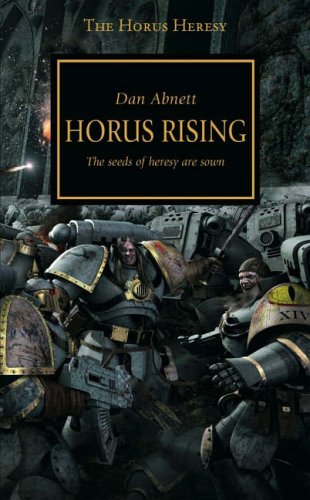
Dan Abnett, "Horus Rising" (Black Library)

Horus Rising is the first book in a trilogy from Black Library that chronicles the events of the Horus Heresy, a time when humanity was ripped apart in an intergalactic civil war, under the leadership of Warmaster Horus, one of the Emperor's Primarchs and formerly the Emperor's favourite.

In Horus Rising, the Warmaster has not yet fallen from grace - indeed, he and his private legion of warriors, the Luna Wolves, are a proud and pure as can be. Focussing on the experiences of Garviel Loken, captain of the Luna Wolves' Tenth Company and his rise to prominence in the Warmaster's private council (the Mournival), it paints a nice picture of the time, while avoiding cliches and the possibility of letting tales of the Primarchs (genetically engineered super-humans twice as tall as your average man) get out of hand - one, Sanguinius, has wings, so if it had focussed on him, then it could have become a little tiresome.

Dan Abnett, who has also written Black Library's highly praised (and rightly so) Gaunt's Ghosts series as well as stories for 200AD's Sinister Dexter, and presently Superman for DC Comics, shows he has only grown as an author. The pacing, the prose and story arc are flawless; never rushing to get to a certain point, never giving away too much, and never falling into clumsy or over-dense narrative.
One of the most interesting elements of the novel is the inclusion of the remembrancers - effectively journalists of this time, allowed passage with the Crusade fleet for the first time, with before unheard of access to the battlefields and commanders. They bring a very human element to the proceedings, and through them, the warriors of the Luna Wolves - especially Garviel Loken - confront their position as genetically engineered killing-machines, and their blind faith to being completely, unequivocally right in every way.
With the next two instalments being written by different authors (Graham McNeill's "False Gods", and Ben Counter's "Galaxy In Flames: The Heresy Revealed"), one can only hope that they do this beginning justice, for truly this is a great Science Fiction novel, and an important event in the Black Library's history. Hopefully, we'll be able to get you reviews of these two novels as soon as possible.
From brutal, fast-paced battle sequences, to introspective and personal moments between Loken and either his fellow captains or Mersadie Oliton, his defacto personal remembrancer, and with emotion and humour in decent amounts, Horus Rising has everything you could want from a novel.
www.blacklibrary.co.uk

Wednesday, April 19, 2006

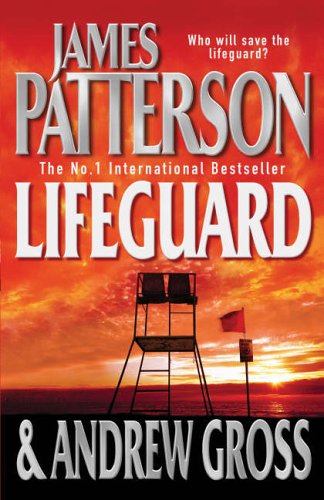
James Patterson & Andrew Gross, "Lifeguard" (Headline)

There is something decidedly ridiculous about this novel. First of all, the main protagonist, Ned Kelly ("Like the outlaw") is an idiot. Supposedly he has a degree in government and was a teacher. So why, pray, does he do so many stupid things?!
Ned joins some lifelong friends in a scheme to make $1million each, in one easy swoop - stealing 3 pieces of art from a wealthy Floridian. Only thing is, they're set up and things spiral out of control for care-free (and hitherto conviction-free) Mr Kelly.
Instead of dealing with the problem like a sane person, Ned decides to go all outlaw (like his name) and try to fix things by himself. This only gets him into more trouble.
True, there is no way this book would have been written if he hadn't gone on the lam, ignoring all common sense and logic. If nothing else, we meet some interesting characters - from Ned's Kiwi biker friend; Ned's "nemesis" Ellie Shurtleff, the FBI agent who's after him, but falls for him; bad guys who are actually written well, and you find yourself despising them, rather than rooting for them (as can be the case in many poorly written thrillers)... Characterisation is good, but not brilliant. The dialogue, cliches and cheese aside, does work nicely, and rarely sounds forced or unnatural.
As with all James Patterson novels, you have to shelf certain truths about the world, and simply enjoy the ride, trying not to grimace at the way people only seem to experience extremes of emotion (elation or despair - we'll have nothing else, thank you!), how some of the cheesiest phrases uttered by man seem to be met with delight and success. And people fall in love way too quickly, and with too many people (knowing they are the one for them, surely, can only happen twice in a couple of months with only the most fickle of people...).
Written with one of the ever-growing hordes of collaborators, Andrew Gross tends to work on the better novels ("2nd Chance", "3rd Degree", "The Jester"), but I think it perhaps Mr Gross' input that jacks up the emotions and schmaltz. "The Jester" had the most ridiculous ending, and Lucy Boxer, the main characte of "2nd Chance" and "3rd Degree" kept crying all the time!
Like always, there are a gazillion chapters, too (okay, there are 120, in 311 pages), so the pace is ramped up to the max throughout.
It's fun. It's rollicking in all the right ways. It's a good summer read. It's typical Patterson. Enjoy.

Saturday, April 08, 2006

James Twining, "The Black Sun" (Harper Collins)

Sequel to The Double Eagle, The Black Sun is a fine sophomore novel from a truly talented British author.

James Twining has managed to write a twisting tale of historical intrigue and action, while not falling foul to the cliches and pot-holes that affect Dan Brown. There's no dubious religious connotations or huge leaps into left field to help his arguments and premises. True, he's clearly made some of the background up, but then that's why this book is found in the "Fiction" section of Waterstone's...

Delving into the myths and oddities of the Nazi SS, the Black Sun is another tale starring Tom Kirk, The Double Eagle's art-thief-cum-action-hero that we all fell in love with last time around. This time, Tom is thrown into a dangerous quest after a number of high-profile thefts of art and a coding machine. Not to mention the arm thieves took from a concentration camp survivor...

Twining's style is so fluent and flowing that it is impossible to put this book down. Drawing us through the story with his prose and premises, the story rattles along at a fair clip, never pausing for long enough to catch our breath before a new twist is revealed. From London to St Petersburg, the action is varied and exciting, utilising all the best thriller devices, yet never coming across as tired, cliched or plagiaristic. Twining has his own voice, but one that sounds familiar and comfortable.

Fluid and eloquent, The Black Sun is a delight to read. One of this year's must-have thrillers.

www.jamestwining.com